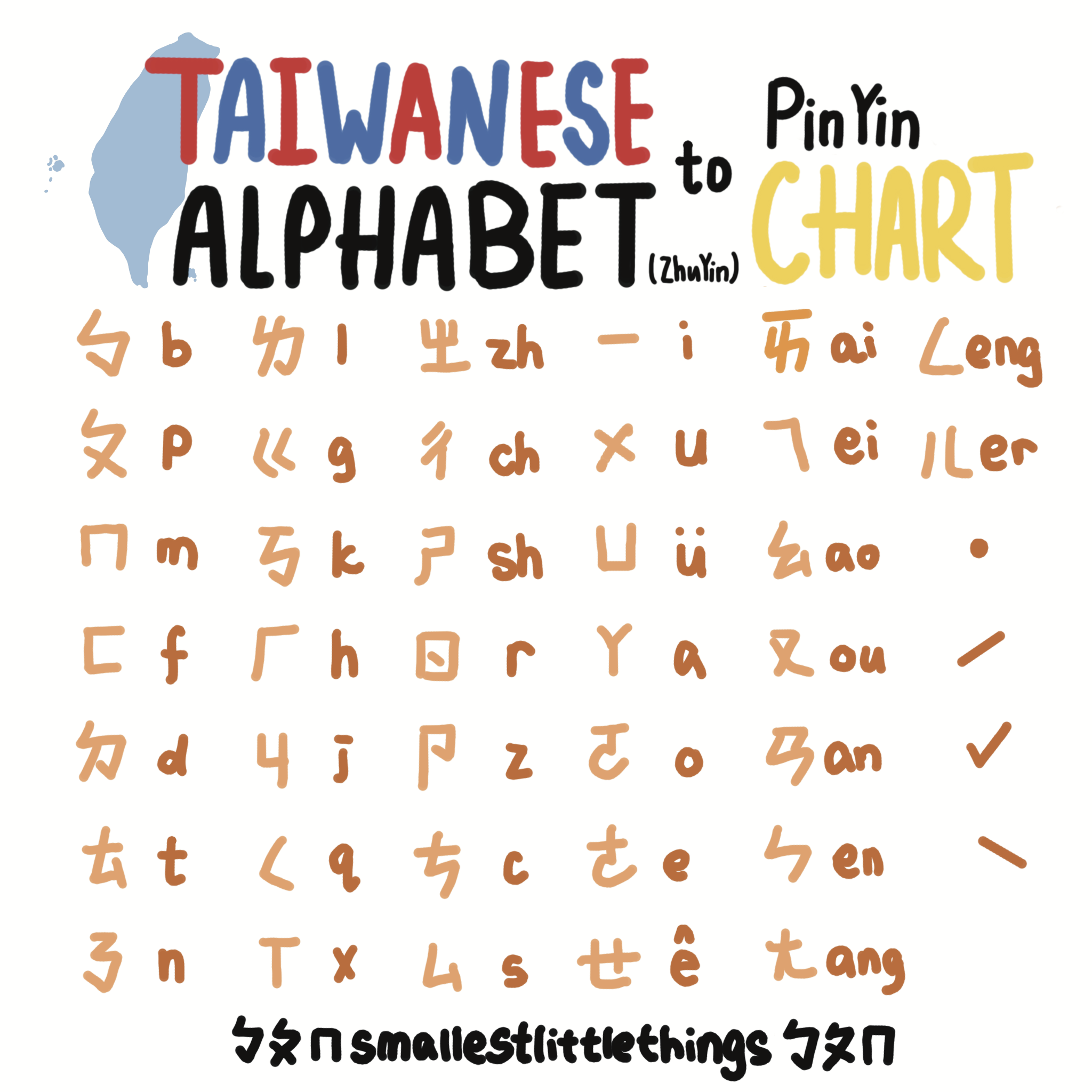
Did you know Taiwan has a secret, alien-looking script that everyone here learns as a kid? It’s called Zhuyin, or “Bopomofo,” but if you’re not Taiwanese, it looks like a bunch of random squiggles. But, guess what? If you can master these little symbols, you’ll become a language wizard in Taiwan, with locals marveling at your skills. Let me tell you all about this unique Taiwanese “code system.”
Why do Taiwanese use Zhuyin and not Pinyin?
You’re probably thinking, “Why does Taiwan use these funky symbols for learning Chinese? Why not use Pinyin like people in China?” Ah-ha, great question. Here’s the tea: Zhuyin was actually created earlier than Pinyin, back in the 1910s, to help people learn how to pronounce Chinese characters. Pinyin, on the other hand, didn’t come until the 1950s, when it was developed as a Romanized system using the alphabet.
So What Exactly is Pinyin?
Think of Zhuyin as Taiwan’s version of the ABCs. Each little symbol represents a sound, and once you learn it, you can pronounce all the words here—and even speak more authentically.
How cool is that?
The Struggle of Learning Zhuyin
Every Taiwanese kid has to go through the painful process of learning Zhuyin. The kids here are sent to these classes called “zhen yin ban” (正音班) before they even hit elementary school. Imagine tiny tots learning things like ㄅ, ㄆ, ㄇ, ㄈ, and then being thrown into ㄧ, ㄨ, ㄩ and tone marks—chaos, right? It’s like trying to crack a secret code, and your brain almost explodes. Many kids mix up symbols like ㄉ and ㄊ, sounding like little robots for a while. But when they finally master these symbols? It’s like unlocking the ultimate cheat code to reading Chinese!
In the first and second grades, most textbooks in Taiwan have Zhuyin written next to every Chinese character. This helps kids know exactly how each word is pronounced, even if they don’t recognize the character yet. And here’s the clever part: as they read more and more, they’re not just practicing pronunciation, they’re also gradually learning to recognize the characters themselves. By around third grade, the Zhuyin usually disappears. At that point, kids are expected to read independently without it.
Zhuyin and Taiwanese Culture
Zhuyin isn’t just a tool for learning Chinese; it’s a key part of Taiwanese culture!
Most people here use Zhuyin as their go-to input method on phones, typing Chinese characters with it. And it even sneaks into daily chats, with some using Zhuyin in text messages like a secret emoji code. For example, ㄎㄎ means “haha.” You might also see people use ㄏㄏ for “haha” too but it’s a slightly drier “haha”), or ㄎㄅㄎ, which stands for “可不可” and yes, it’s also the name of a trendy tea shop.
Zhuyin vs. Pinyin: The Ultimate Showdown
So, you might ask, “Which is better, Zhuyin or Pinyin?”
Well, I learned Pinyin first, and yes, it’s easier since it looks a lot like English letters, and the pronunciation feels somewhat similar to phonics.
But Zhuyin? Zhuyin has its own vibe. Each symbol feels like a tiny piece of ancient art, evolving from Chinese radicals. And once you get used to it, it’s downright adorable!
Plus, if you learn Zhuyin, and you’ve just unlocked a whole new way to whisper secrets… unless you’re talking to a Taiwanese of course.
Conclusion: Zhuyin is Taiwan’s Language Superpower
In short, Zhuyin isn’t just a tool for learning Chinese, it’s embedded deep into Taiwanese culture and life.
Whether you’re a total beginner at Chinese or just trying to dive deeper into Taiwan’s unique vibe, learning Zhuyin is a must! It’ll help you fit right in with the locals and give you an authentic Taiwan experience like no other.
So, next time you’re in Taiwan, give Zhuyin a try! You’ll be amazed at how fun and handy it is. And if you already know Pinyin, why not level up with this “alien code”? You might just fall in love with it!